About
Shomeret Shalom is a seven-fold pathway of Jewish revolutionary nonviolence which incorporates noncooperation with systemic violence and war as matters of religious observance.
A commitment to nonviolence distinguishes Shomeret Shalom from communities of practice which espouse love and the pursuit of social justice but believe that war and militarism are necessary evils in order to protect Jewish people from harm.
A practitioner of Shomeret Shalom chooses to follow the seven-fold pathway of Jewish revolutionary nonviolence as the best method for keeping all of us safe and opening channels of Loving Presence in our lives.
Ecology of Nonviolence
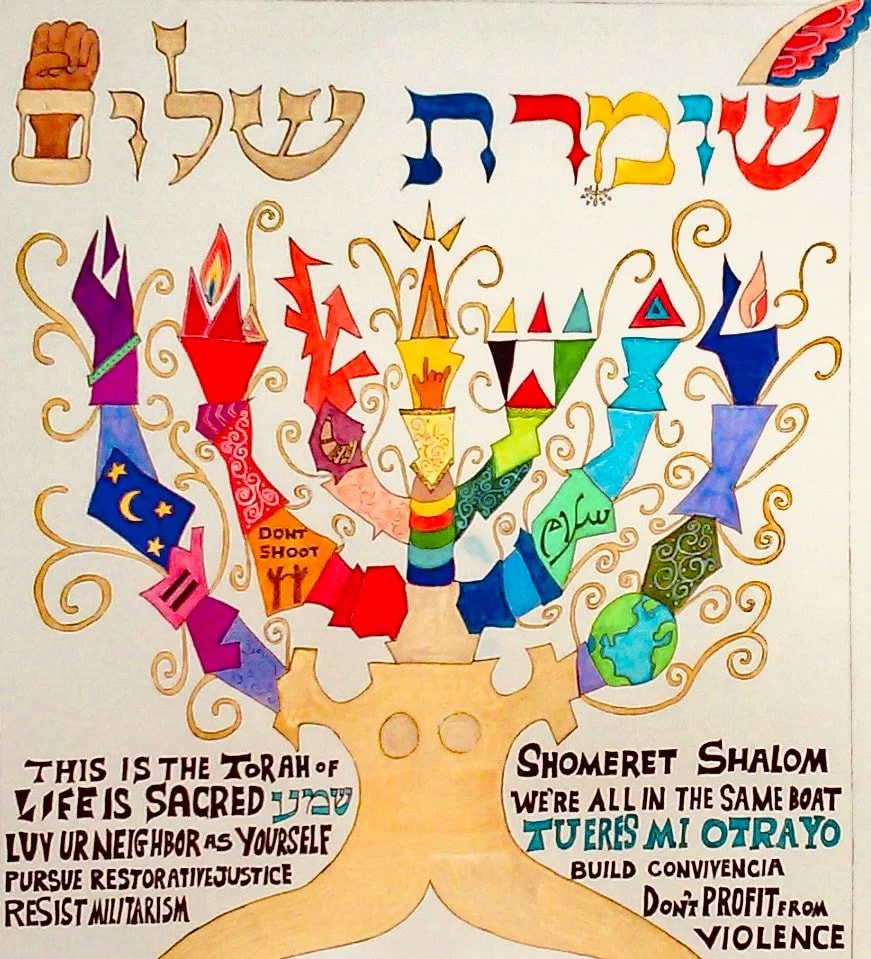
In Shomeret Shalom, the Torah of Nonviolence:
Is a spiritual framework
Is feminist and queer, growing in the soil of Torah’s defiant womyn
Is diasporic, anti-zionist, decolonial practice
Is playful
Centers prophetic justice
Follows a trail laid down by pacifist rabbis
Studies nonviolent movement histories and the researched work of nonviolent civil resistance
4 Spheres of Practice
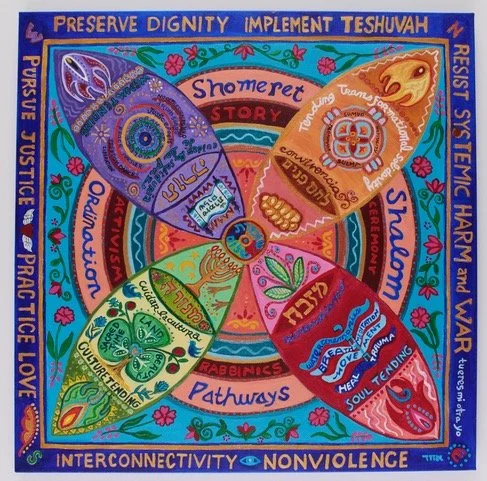
Soul Tending: Nurturing spiritual resilience and healing for self and community.
Cultural Arts Tending: Reclaiming diasporic creative and ceremonial practices.
Wisdom Tending: Studying Jewish and global liberation wisdom texts.
Tending Transformational Solidarity: Building relationships across, and in support of, frontline communities, and practicing nonviolent tactics, such as decolonial pilgrimage.
7 Middot (Values)
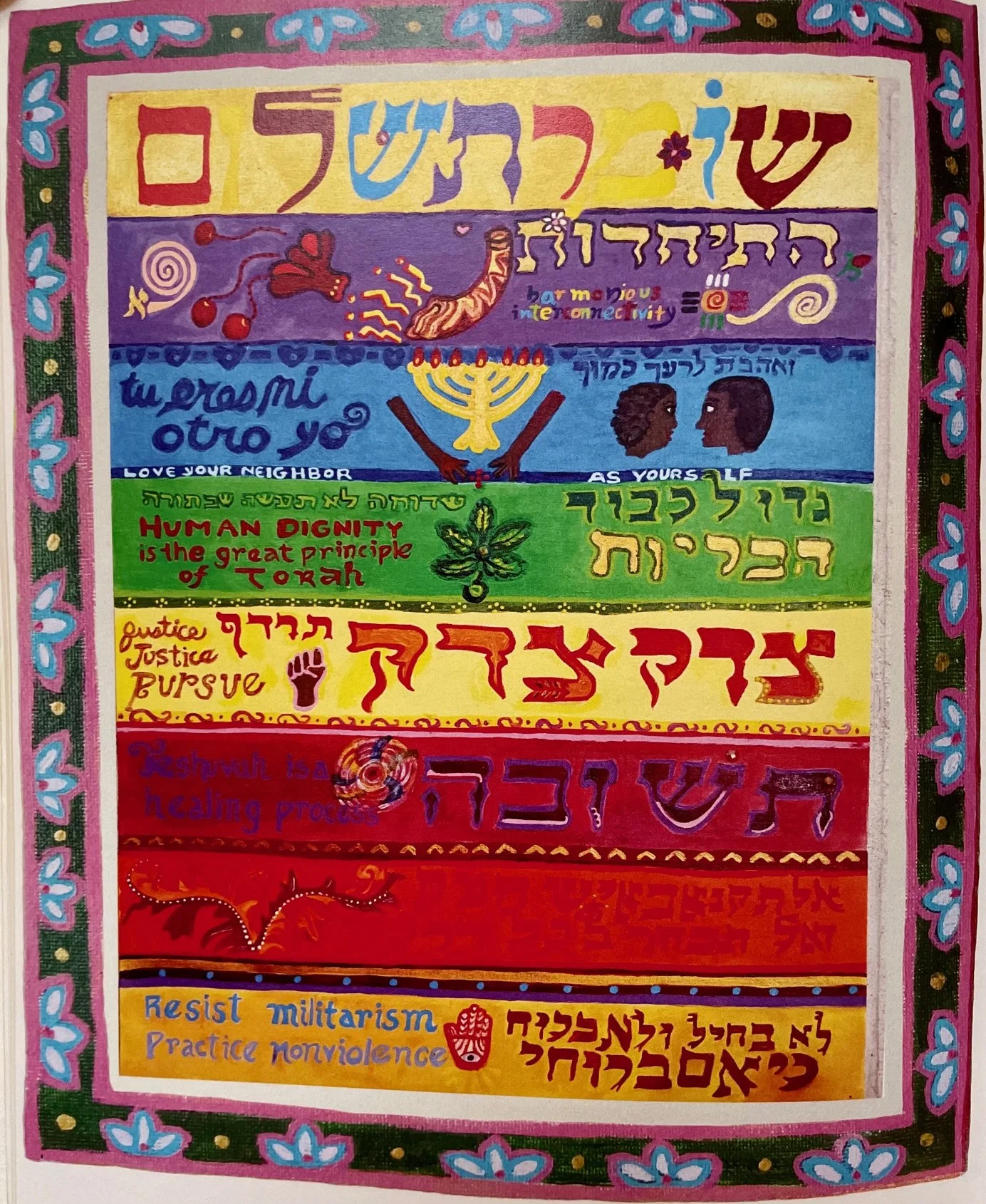
Hit-yakh-dut (Harmonious Interconnectivity): Awareness of the interconnection of all life in a single web of existence.
Ahava (Love): Treat ourselves and others in ways that cause people to feel fully welcome and valued.
Gadol Kavod Habriot (Great is Human Dignity): The mitzvah to uphold human dignity abrogates Torah prohibitions. The absolute sanctity of human dignity is introduced in the Torah with the creation of humanity as a non-binary divine image molded from the soils of the earth.
Tzedek Tzedek Tirdof (Justice Justice pursue!): Justice is mentioned twice. Once for the instruction to immediately intervene to stop harm and a second time to remind us to remain steadfast for the long haul in pursuit of justice.
Teshuvah (Repair Harm): A five-step system for creating a culture of repair. The steps include acknowledgement, accountability, truth telling, reparations and guarantees of non-repeat.
Al Tikneh (Noncooperation with Systemic Violence): How do we prevent and actively obstruct violence? How do we build a culture of peace? Our response requires creative collective and introspective work and tactical experimentation, along with observance of Shomeret Shalom kashrut.
Lo B’Hayil (Active Resistance to Militarism and War): A Shomeret Shalom practices conscientious objection to militarism and war while building a culture of peace.